
Lithium-ion and lead-acid battery packs power a substantial portion of today's clean technology, yet users frequently encounter a common technical challenge over extended operation: growing voltage discrepancies between individual cells. When a battery pack suffers from severe imbalance, it can neither charge to full capacity nor discharge its total stored energy safely. While a standard Battery Management System handles minor maintenance, severe cell divergence requires a dedicated Battery Balancer and professional maintenance machinery to restore optimal performance. For technicians, fleet operators, and industrial users, choosing the correct diagnostic and restoration equipment forms the foundation of reliable battery servicing. To meet these rigorous demands, Chengdu Heltec Energy Technology Co., Ltd. delivers specialized equipment that can pinpoint exact cell-level deficiencies and perform high-current equalization to protect long-term investments.
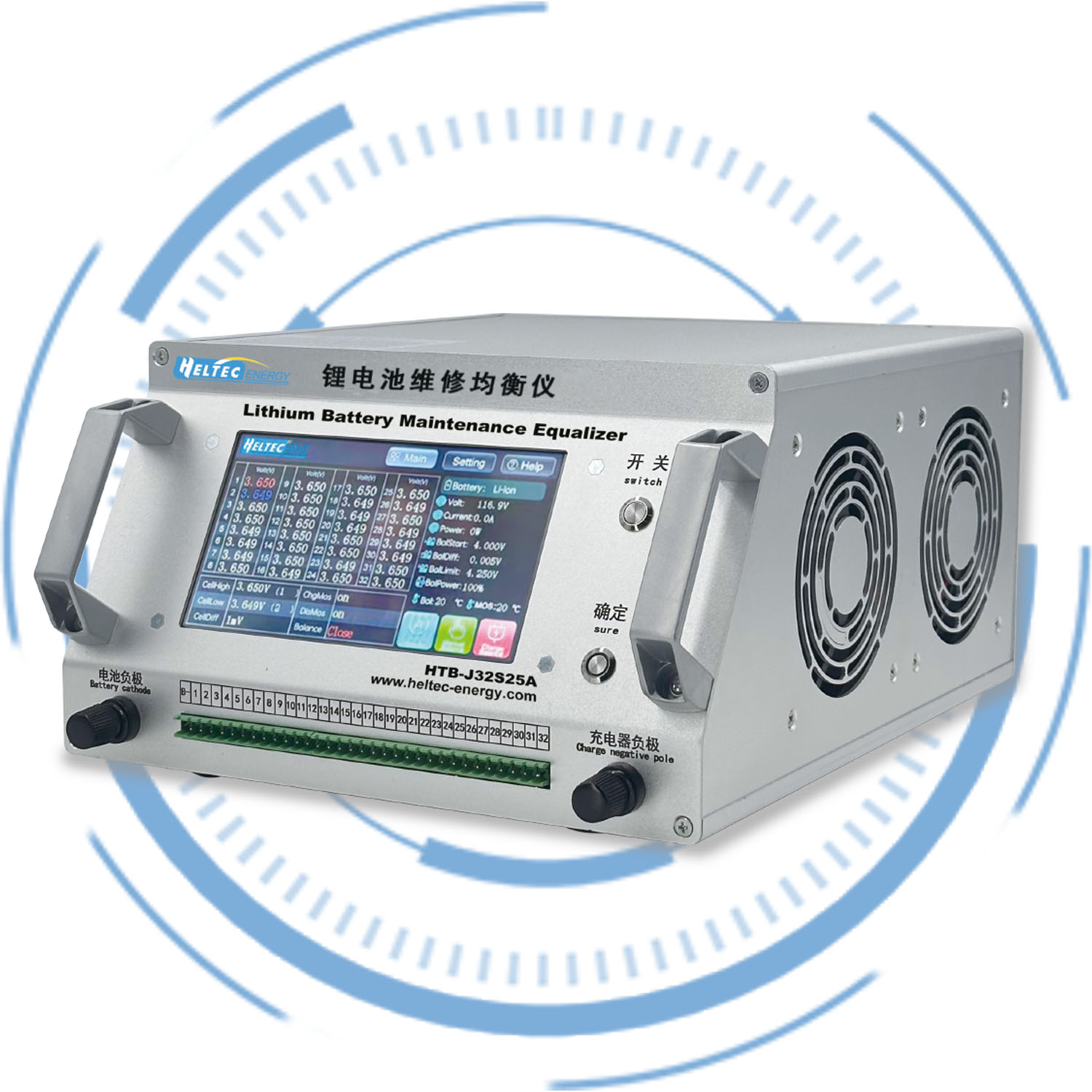
Step 1: Determining Cell Imbalance Severity
Determining the severity of cell imbalance represents the initial phase of any battery maintenance protocol. Technicians typically measure the open-circuit voltage of each individual series cell within the pack to pinpoint the exact variance. When the voltage difference between the highest and lowest cells exceeds 30 to 50 millivolts, or when the overall pack capacity exhibits a sudden, unexplained drop, standard passive balancing proves insufficient. Under these conditions, the internal resistance differences cause certain cells to reach their cut-off thresholds prematurely, locking up the remaining usable capacity of the pack.
While minor, routine deviations can be managed by installing permanent active balancing modules for continuous micro-adjustments, severe voltage drops require external, high-current service instruments to re-align the pack. Prolonged imbalance accelerates the degradation of weaker cells, potentially leading to localized overheating or premature pack failure. Identifying the exact threshold where passive protection fails and professional service instruments must step in protects the longevity of the entire power system and prevents expensive replacement costs.
Step 2: Selecting Specialized Battery Maintenance Balancers
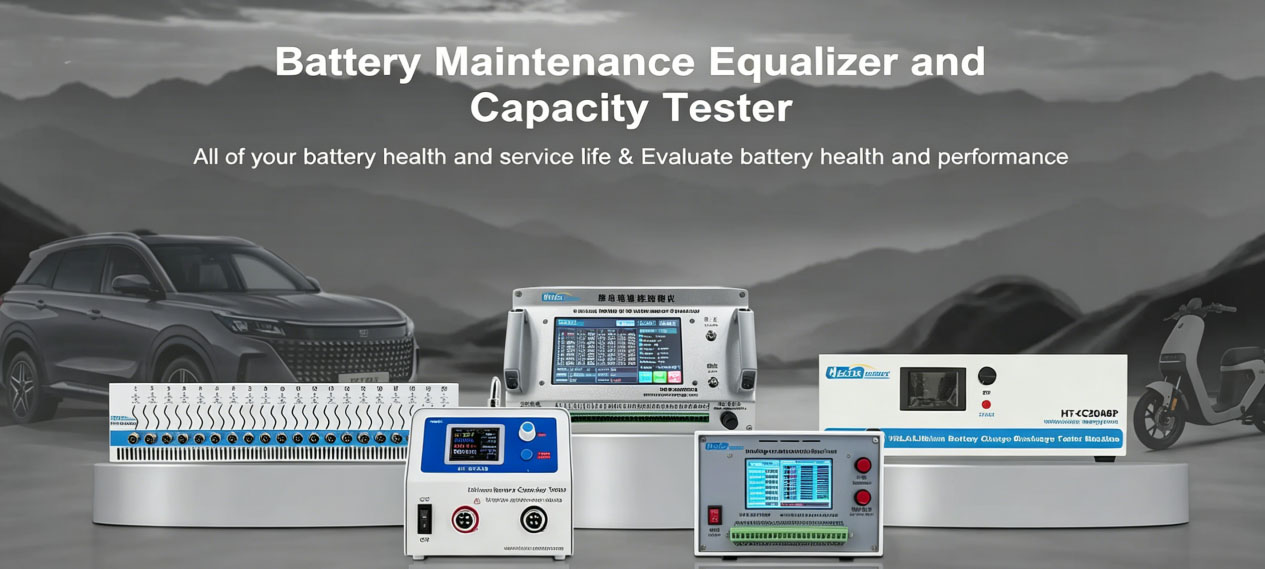
To address these distinct servicing challenges, Chengdu Heltec Energy Technology Co., Ltd. develops specialized, high-current equipment designed for multi-scenario battery restoration. Combining high-precision charge-discharge testing, internal resistance analysis, and active balancing technologies, these desktop and portable systems allow operators to isolate failing cells and eliminate severe voltage gaps. Rather than relying on passive resistor dissipation, these heavy-duty instruments actively transfer energy to establish equilibrium within the assembly.
1. Portable Capacity Analyzers for Micro-Mobility
For micro-mobility applications, such as electric scooters and two-wheelers, portable battery capacity analyzers with integrated balancing functions provide efficient field-service capabilities. These compact instruments accommodate lower-voltage, smaller battery packs, allowing repair shops to perform rapid diagnostics and localized voltage equalization directly on-site without transporting bulky equipment. The streamlined interface allows local technicians to handle rapid turnaround maintenance, keeping corporate fleets operational with minimal downtime.
2. Desktop Testing Systems for Electric Vehicles
For electric vehicles and large-scale power packs, desktop battery charge-discharge testers paired with high-current active balancing modules offer deeper intervention. These industrial-grade systems manage high series-count lithium configurations, executing precise capacity calibration and deep voltage equalization to eliminate persistent cell gaps that compromise vehicle range. The high-current delivery ensures that large-capacity cells undergo rapid balancing without overheating the surrounding infrastructure.
3. Multi-Channel Maintenance Instruments for Energy Storage Systems
For residential and industrial energy storage systems, multi-channel capacity testing and maintenance instruments support long-term cycle activation. These systems systematically cycle and balance high-capacity energy storage blocks, reversing the effects of uneven cell aging and restoring operational stability to stationary power infrastructures. By utilizing multiple independent channels, service teams can evaluate diverse segments of a storage array simultaneously, enhancing overall workflow efficiency.
Step 3: Following the Standard Battery Restoration Procedure
Executing a standard battery restoration procedure requires a systematic, multi-step technical workflow to ensure safety and precision. The process begins by entirely disconnecting the battery pack from its operational load and charger to prevent electrical short circuits. Next, the technician inputs individual series voltage data into the balancing instrument to map out the exact state of imbalance. After establishing these baseline parameters, the operator configures specific charge and discharge cutoff thresholds based on the exact battery chemistry involved.
The instrument then initiates high-current active balancing and capacity calibration, transferring energy from stronger cells to weaker ones without wasting power as raw heat. Once the service cycle finishes, a final measurement verifies that the residual cell-to-cell voltage gap has dropped below 10 to 20 millivolts before the pack is reassembled and reinstalled into the primary power system. This rigid sequence prevents thermal runaway and ensures uniform energy distribution across all internal modules.
Step 4: Key Procurement Considerations for Equipment Buyers
Selecting the appropriate maintenance equipment depends on several key technical variables tailored to the specific business operation. Buyers must match the device specifications with the exact battery chemistry involved, whether working with Lithium Iron Phosphate or Nickel Manganese Cobalt formulations. Furthermore, the instrument must support the correct series cell count, with configurations commonly spanning from 8S to over 32S to fit diverse pack architectures. Operators should also consider whether the business model requires portable, field-ready instruments or laboratory test benches.
Supported by a professional R&D team and strict quality control, Heltec Energy holds international certifications and provides flexible OEM/ODM services. Purchasing original equipment ensures access to factory-calibrated precision, complete supply chains, and dedicated technical support networks. Investing in properly certified hardware guarantees accurate measurement data and safeguards personnel during high-voltage service routines, minimizing operational risks for global manufacturers and partners.
Conclusion
Successful battery restoration relies on a methodical process of precise diagnosis followed by targeted equalization. By implementing professional servicing instruments across applications ranging from micro-mobility to industrial energy storage, operators can protect their energy investments and maintain high system safety. For organizations seeking tailored power management solutions, consulting an experienced equipment supplier helps align specific pack requirements with the correct diagnostic machinery. Utilizing proper toolsets remains the most reliable pathway to extending operational life cycles and minimizing total cost of ownership.
To explore technical specifications or request a product consultation, please visit the official website at https://www.heltec-energy.com/
Post time: Aug-09-2026